Iran Saudi Arabia Conflict 2026: How the War Escalated and What It Means
Listen to this article 1× The Iran Saudi Arabia conflict 2026 began on 28 February 2026 when U.S. and Israeli strikes on Iranian sites…

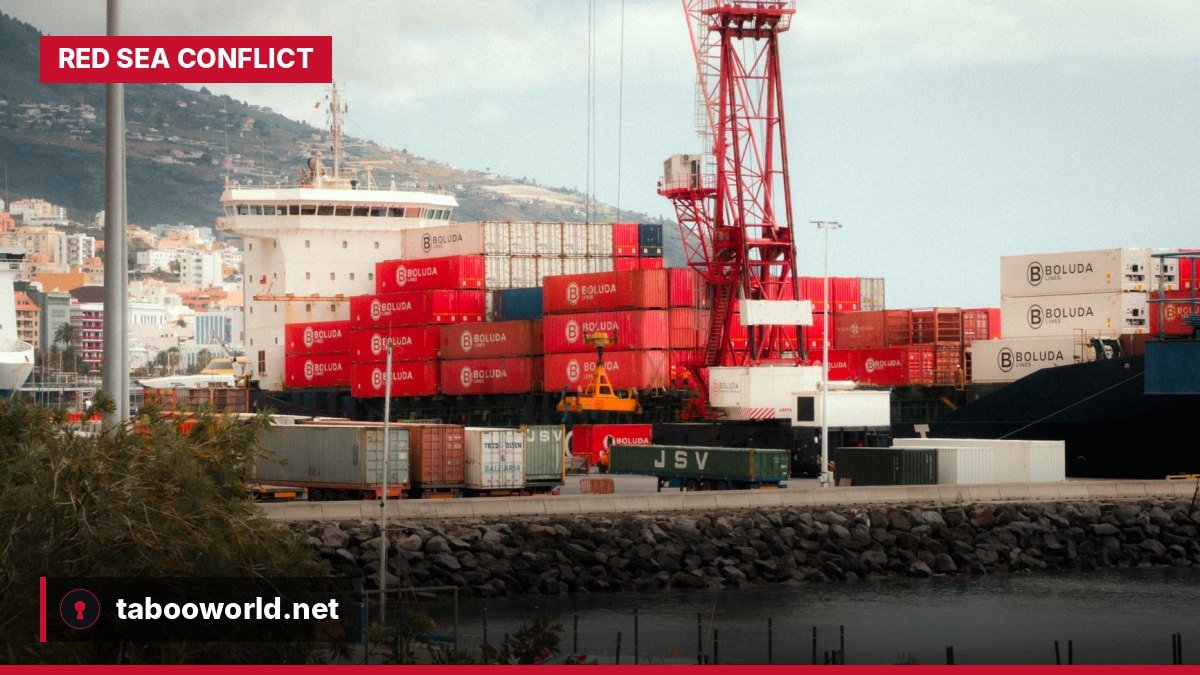
To effectively deal with Houthis, international efforts must move beyond failed military strikes and ineffective sanctions, focusing instead on using the group’s economic vulnerabilities and fostering regional unity, according to former Deputy U.S. Special Envoy for Yemen Allison Minor. The Houthis, a formidable fighting force with Iranian support, have repeatedly demonstrated their resilience against conventional military responses since their escalation of attacks on commercial shipping in the Red Sea in November 2023.
Current strategies to deal with Houthis, including U.S. airstrikes, economic sanctions, and naval campaigns, have largely proven inadequate because they fail to address the group’s core drivers and vulnerabilities. The Houthis have continued to hold the Red Sea hostage, disrupting global maritime commerce and forcing shipping companies to reroute around Africa, despite these efforts, according to Foreign Affairs.
U.S.-led naval operations, while successful in intercepting many drones and missiles, cannot defend against every attack across hundreds of miles of sea. The Houthis can fail 90% of the time and still achieve their objective of making passage unacceptably risky for commercial shippers. After enduring a seven-year Saudi-led air campaign, the Houthis have learned to protect their military assets and rapidly replenish their missile and drone stocks, benefiting from an Iranian-supported smuggling network and domestic weapons manufacturing capabilities. For instance, a United Nations panel of experts reported in 2025 that the Houthis had developed missile and drone technologies through technical assistance and domestic manufacturing, with widespread arms smuggling despite a UN arms embargo, as reported by Reuters via Al-Monitor.
Economic sanctions have also been largely ineffective. Unlike Iran’s economy, which relies on global oil exports, Houthi revenues come from domestic and illicit sources. These include aggressive taxation in Houthi-controlled areas, tariffs on goods from government-controlled southern Yemen, diversion of profits from confiscated assets, and drug trafficking, according to Saudi authorities. This insulates them from sanctions designed to isolate countries from global commerce. They also receive donated Iranian fuel, further shielding them from world market pressures.
Also, military action often bolsters the Houthis’ political legitimacy. By appearing as victims of U.S. and Israeli bombardment, they reinforce their narrative of fending off foreign aggression. Houthi leader Abdul-Malik al-Houthi openly stated that the Yemeni people are proud to confront the United States and Israel, vowing to continue the fight, according to Foreign Affairs. Israeli airstrikes on the port of Hodeidah, a important economic and humanitarian site, have only inflamed Houthi rhetoric and led to new attacks against Israel, as detailed by Global Security Review.
The Houthis’ economic posture, rather than their military strength, presents their most significant vulnerability. While they have proven resilient to military strikes and sanctions, their control within Yemen depends heavily on maintaining basic services and addressing economic grievances. Before October 7, 2023, the group faced growing pressure from business leaders and popular protests over economic mismanagement, lack of services, and unpaid public sector salaries, as noted by Foreign Affairs. These complaints evaporated when the Houthis aligned with the Palestinian cause and began attacking Israel and the United States.
To truly pressure the Houthis at home, influential business, tribal, and political groups within Yemen must believe a viable alternative exists to the Houthis’ repression and poor governance. The group currently reigns largely uncontested over northern Yemen, having established a firm grip on all government, religious, economic, and social institutions.
A pragmatic policy of containing and diminishing Houthi military and political power should focus on these weaknesses. The Washington Institute suggests supporting non-Houthi areas of Yemen militarily and economically, akin to how South Korea was supported. This includes reactivating projects like the Yemen Liquefied Natural Gas (YLNG) initiative and oil exports, with outputs potentially shared with Houthi-held areas if the group demonstrates sustained non-aggression.
A multi-dimensional, coalition-led effort combining kinetic force, strategic isolation, regional realignment, and political recalibration is necessary to neutralize the Houthi threat, according to Global Security Review. This approach requires greater strategic unity among Arab states, especially Saudi Arabia, the United Arab Emirates (UAE), and Egypt.
Key strategies for containing the Houthis include:
Precision airstrikes and covert special operations targeting command-and-control nodes, drone operation sites, and smuggling depots are also part of a multi-domain campaign, but they must be continuous and integrated with intelligence fusion centers involving the U.S., UAE, Saudi Arabia, and Egypt, as highlighted by Global Security Review. Cyber disruptions targeting Houthi satellite navigation and drone-control networks are also important, especially given reports of Russian support to the Houthis with targeting data and direct coordination with Chinese officials regarding safe passage for Chinese vessels.
The Houthi threat to global shipping involves repeated attacks on commercial vessels in the Red Sea, Bab el-Mandeb Strait, and Gulf of Aden using drones, cruise missiles, and unmanned suicide boats. These attacks disrupt global maritime commerce, raise insurance rates, and force shipping companies to take longer routes around Africa, impacting global supply chains and GDP.
U.S. airstrikes are largely ineffective because the Houthis have learned to protect their military assets, rapidly replenish missile and drone stocks, and benefit from an Iranian-supported smuggling network and domestic weapons manufacturing. Strikes also often bolster the Houthis’ political legitimacy by allowing them to portray themselves as victims of foreign aggression.
The Houthis primarily fund their operations through domestic and illicit sources, including aggressive taxation of the Houthi-controlled Yemeni economy, tariffs on goods from government-controlled southern Yemen, diversion of profits from confiscated assets and state-owned companies, and drug trafficking. They also receive donated Iranian fuel.
Iran plays a critical role in supporting the Houthis by providing weapons, technical assistance, and experts, according to UN reports and Iranian sources. This support includes smuggling missile and drone components, as well as providing training, which has helped transform the Houthis from a militia into a more organized military force.
The long-term strategy for containing the Houthis involves a multi-dimensional, coalition-led effort. This includes economically bolstering non-Houthi areas of Yemen, rigorously enforcing weapons embargoes, building a strong regional security coalition, and strategically isolating the Houthis from Iranian support through interdiction and financial pressure.
Sources: Foreign Affairs – The Washington Institute – Global Security Review – AL-MONITORUpdated: November 1, 2026.
Listen to this article 1× The Iran Saudi Arabia conflict 2026 began on 28 February 2026 when U.S. and Israeli strikes on Iranian sites…
Listen to this article 1× How many Houthis have been killed is a question that remains clouded by contradictory reports and limited verification. Key…
Listen to this article 1× On November 8 2026, shrapnel from intercepted Houthi missiles struck a Saudi Aramco administrative tower in Riyadh’s King Abdullah…