Canada Cost of Living: The Hard Truth Behind the Numbers
Listen to this article 1× Canada cost of living is the total amount a typical household must spend each month on housing, food, transport…


Why Houthis fight Saudi Arabia is rooted in a blend of political marginalisation, sectarian rivalry, and strategic competition for regional influence.
The Houthis come from the Zaidi Shia community of northern Yemen, long‑standing victims of marginalisation by the central government. When the Arab Spring toppled President Ali Abdullah Saleh in 2011, the power vacuum let the Houthis move northward. Their seizure of the capital, Sana’a, in September 2014 prompted the internationally recognised government to ask for Saudi assistance, sparking the 2015 Saudi‑led intervention.Wikipedia
Saudi support for the Yemeni government appears to the Houthis as an attempt to reinstall a Sunni‑dominated regime that has historically excluded Zaidi interests. That perception fuels a narrative of “defending Yemen from foreign aggression,” which the Houthis use to justify attacks on Saudi soil.
Yemen’s Zaidi Shia identity clashes with Saudi Arabia’s strict Wahhabi Sunni doctrine. Saudi funding of Sunni clerics and militias across the Arabian Peninsula is seen by the Houthis as a broader campaign to suppress Shia communities. The rivalry sharpened after Saudi Arabia’s 2018 blockade of Yemen’s ports, which the Houthers framed as a punitive measure against Shia‑aligned groups.
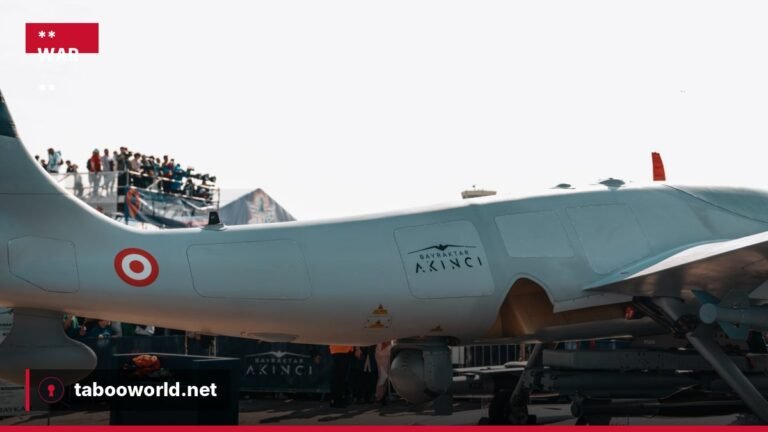
Iran seeks to counter Saudi regional dominance. By supplying the Houthis with ballistic missiles, drones, and naval mines, Tehran creates a proxy that can threaten Saudi oil infrastructure without direct confrontation.Wikipedia
According to the New York Post, “the Iran‑backed terror group has also taken over the critical Bab al‑Mandeb Strait and disrupted flow along the Saudi East‑West Pipeline.” This pressure heightens Saudi worries about energy security and forces Riyadh to divert resources to missile defence instead of diplomatic outreach.
“For the Gulf allies, they are likely concerned about being on the receiving end of Iranian and Houthi retaliation.”
Mona Yacoubian, CSIS Middle East Program
1. DeterrenceHitting Saudi cities such as Riyadh or Jeddah forces Riyadh to rethink its military pressure on Houthi‑held areas.
2. Economic useTargeting oil pipelines and the Bab al‑Mandeb Strait threatens global oil markets, raising the cost of Saudi aggression.
3. Political messagingEach successful strike reinforces the Houthis’ claim as defenders of Yemeni sovereignty against “foreign invaders.”
Saudi Arabia relies on a layered air‑defence system, including US‑made Patriot missiles and the domestically produced “Skyguard” batteries. Since 2022, the kingdom has shot down more than 300 Houthi drones, according to the Saudi Ministry of Defence.Wikipedia
Still, the Saudis report a shortage of interceptors, prompting them to seek additional air support from France, Britain, Pakistan, and Egypt.NY Post
The war has produced one of the world’s worst humanitarian crises. Over 24 million Yemenis need aid, and the United Nations estimates that more than 5,000 civilians have been killed by Saudi airstrikes alone.Wikipedia
Houthi attacks on Saudi oil facilities also cause indirect suffering by inflating global oil prices, which raise the cost of food and medicine in Yemen and the broader region.
| Date | Event | Impact |
|---|---|---|
| 2 Apr 2015 | Saudi‑led coalition launches air campaign | Marks formal start of Saudi involvement |
| 19 Oct 2016 | Houthi missile hits Saudi oil depot in Jizan | First major strike on Saudi soil |
| 13 Sep 2018 | Saudi blockade of Yemeni ports intensifies | Humanitarian crisis deepens |
| 30 Mar 2022 | UN‑brokered ceasefire announced | Violations continue; no lasting peace |
| 15 Oct 2024 | Houthi drone swarm intercepted over Riyadh | Over 30 drones destroyed, civilian alerts issued |
| 22 Sep 2026 | Houthi ballistic missile lands near Riyadh | Several casualties; oil market spikes to $100/barrel |
Turkey and Pakistan signed the 2022 Mecca Agreement, pledging to defend Saudi Arabia, yet both have refrained from direct action. Analysts cite fear of Iranian retaliation and the desire to avoid entanglement in a proxy war that predates the 2022 Iran‑Saudi tensions.NY Post
They aim to remove Saudi influence from Yemen, secure political power for the Zaidi community, and use attacks as use in regional power struggles.
Estimates range up to 350,000 combatants, according to US intelligence assessments cited by the New York Post.
Iran supplies weapons and political support, but the Houthis also pursue distinct Yemeni goals, such as controlling territory and resources.
Violations are frequent; both sides report continued missile and drone exchanges despite the UN‑brokered agreement.
Disruptions at the Bab al‑Mandeb Strait can reduce daily oil flow by up to 5 million barrels, pushing prices above $100 per barrel during spikes.
Sources: Wikipedia – Houthi–Saudi conflict – New York Post – Why Trump is leaving Saudi Arabia alone to fight the HouthisUpdated: November 19, 2026.
Listen to this article 1× Canada cost of living is the total amount a typical household must spend each month on housing, food, transport…
Listen to this article 1× ** Banned vs illegal are often used interchangeably, but they describe distinct legal concepts. Key Facts “Banned” refers to…
Listen to this article 1× ** Iran is launching coordinated missile, drone, and proxy attacks while simultaneously bargaining for a cease‑fire to keep the…