





France’s widespread unrest in 2024 and 2025 stems directly from a profound political crisis triggered by President Emmanuel Macron’s dissolution of the National Assembly in June 2024, leading to a hung parliament and a series of collapsed minority governments. This instability has exacerbated public anger over economic stagnation, social issues, and a perceived governmental inability […]
France’s widespread unrest in 2024 and 2025 stems directly from a profound political crisis triggered by President Emmanuel Macron’s dissolution of the National Assembly in June 2024, leading to a hung parliament and a series of collapsed minority governments. This instability has exacerbated public anger over economic stagnation, social issues, and a perceived governmental inability to act.
Key Facts
- President Macron dissolved the National Assembly in June 2024 after the far-right National Rally won the European Parliament election.
- The subsequent legislative election resulted in a hung parliament with three major, uncooperative blocs.
- France experienced an unprecedented period of political instability, with four minority governments appointed by Macron between September 2024 and October 2025.
- The Barnier and Bayrou governments both collapsed over budgetary disputes, and Sébastien Lecornu resigned after less than a day before being reappointed.
- Public dissatisfaction reached critical levels, with 98% of respondents in a recent Ipsos-BVA poll dissatisfied with the country’s state as of October 2026.
The recent riots and widespread protests across France, as we covered in our article “Is It Safe to Travel to France Right Now? What Tourists Are Walking Into”, are not isolated incidents. They are the visible symptoms of a deep-seated political crisis that has been festering since mid-2024, characterized by governmental paralysis, economic woes, and a highly polarized electorate. The political roots of France 2024 unrest run deep, tracing back to President Macron’s strategic miscalculation in calling snap elections.
How Did France’s Political Instability Begin?
France’s current political instability began with President Emmanuel Macron’s decision to dissolve the National Assembly on June 9, 2024, following the far-right National Rally’s (RN) strong performance in the European Parliament election, where they secured thirty out of 80 seats, according to Wikipedia. This move, intended to consolidate power, backfired significantly. The snap legislative election held on June 30 and July 7, 2024, resulted in a hung parliament, a situation unprecedented in the Fifth Republic.
The National Assembly became split into three powerful, opposed blocs: the left-wing New Popular Front (NFP) with 193 seats, Macron’s centrist Ensemble alliance with 166 seats, and the far-right National Rally with 142 seats. This fragmentation, combined with a French political culture historically averse to coalition governments, created an immediate deadlock, according to Wikipedia. The government of Gabriel Attal resigned on July 15, 2024, ushering in a prolonged period without a fully functioning government.
What Were the Consequences of the Hung Parliament?
The hung parliament led to an unprecedented period of governmental instability and a series of short-lived minority administrations. Macron delayed appointing a new prime minister until after the 2024 Summer Olympics, citing an “Olympic truce,” a singular choice in French politics, as reported by Wikipedia. When he finally began consultations in late August 2024, he notably refused to appoint Lucie Castets, the candidate nominated by the NFP, further exacerbating the crisis.
Between September 2024 and October 2025, Macron appointed four minority governments. Michel Barnier was named prime minister on September 5, 2024, leading a government that lasted only until December 4, 2024, when it was toppled by a vote of no confidence over a social service financing bill, becoming the shortest-tenured government in Fifth Republic history, according to Wikipedia. François Bayrou was appointed on December 13, 2024, but his austerity budget for 2026 faced widespread opposition and led to a heavy defeat in a vote of confidence on September 8, 2025. Sébastien Lecornu was then appointed on September 9, 2025, only to resign the next day, making him the shortest-serving prime minister in French history. He was reappointed on October 10, 2025, and his government survived a no-confidence vote six days later after an agreement on pension reform, Wikipedia states.
| Prime Minister | Appointment Date | Resignation/Collapse Date | Reason for Departure |
|---|---|---|---|
| Gabriel Attal (Caretaker) | January 9, 2024 | July 15, 2024 | Government resignation after legislative election |
| Michel Barnier | September 5, 2024 | December 4, 2024 | Toppled by vote of no confidence (Article 49.3) |
| François Bayrou | December 13, 2024 | September 8, 2025 | Defeated in vote of confidence (Article 49.1) |
| Sébastien Lecornu I | September 9, 2025 | October 6, 2025 | Resignation over cabinet composition |
| Sébastien Lecornu II | October 10, 2025 | (Current) | Survived no-confidence vote October 16, 2025 |
How Has Political Fragmentation Fueled the Unrest?
The political fragmentation, which analysts say is at the core of France’s deepening crisis, has directly fueled the unrest seen in 2024 and 2025. The inability of successive governments to pass a budget through parliament has created a climate of high uncertainty, weighing on confidence and domestic demand, according to Oxford Economics in July 2026. France carries one of Europe’s highest government debt burdens, with debt as a proportion of GDP rising to 119% in the second quarter of 2026, double the EU target, CNN reported on October 19, 2026.
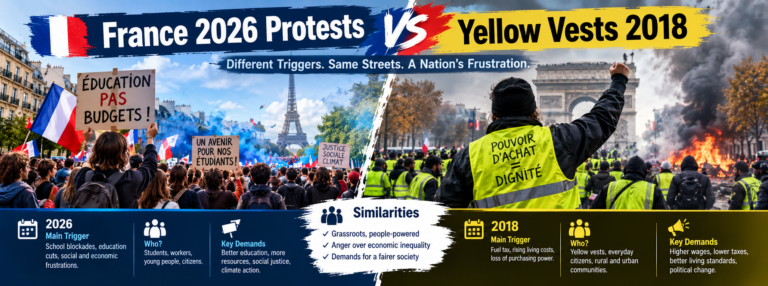
This economic stagnation, combined with issues like crumbling schools, a lack of teachers, and dismal job prospects, ignited student protests in mid-September 2026, as detailed by Lawstreet.co. These demonstrations quickly broadened to include anger over the rising cost of living and falling purchasing power, drawing in workers and trade unions. The General Confederation of Labour (CGT), France’s largest trade union, condemned what it called a “power grab” by Macron and called for strikes on October 1, 2026, against the caretaker government’s budget, Wikipedia notes.
The political void has allowed extremist parties to gain traction. The far-right National Rally and Jean-Luc Mélenchon’s far-left France Unbowed party are harvesting growing public exasperation, according to CNN. Marine Le Pen, a far-right presidential candidate, has blamed the violence on delinquents from France’s poor urban areas and suggested only her “firm hand” could restore order amid Macron’s “chaos.”
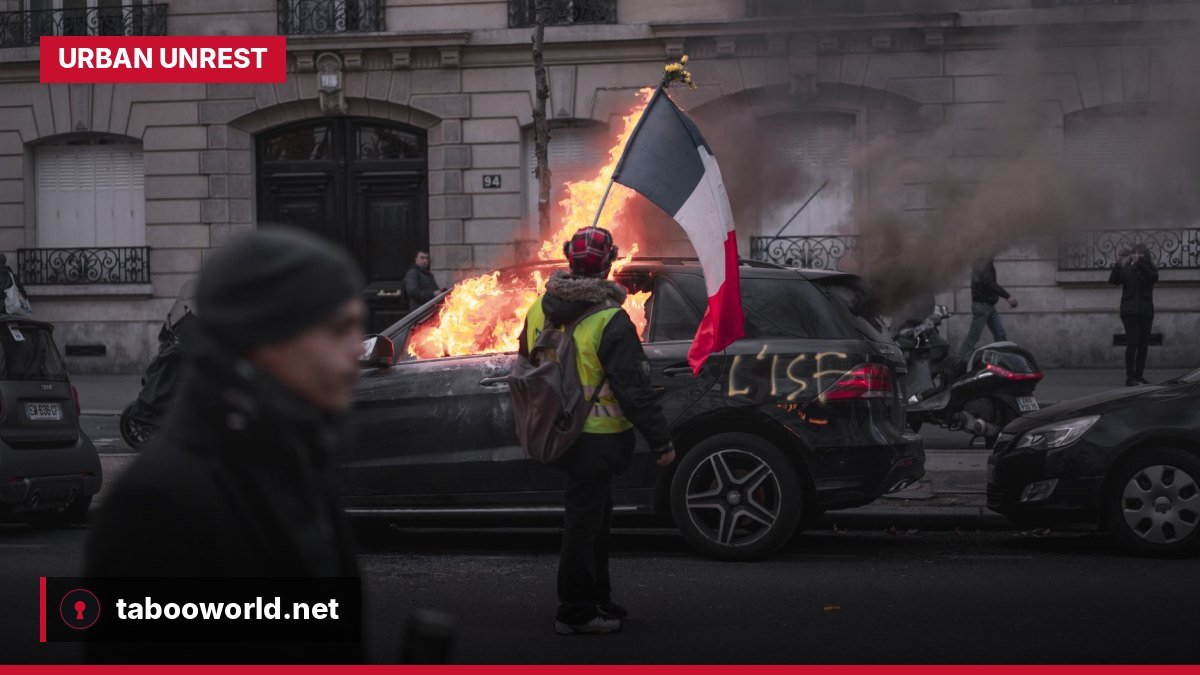
The widespread rioting on October 17-18, 2026, which resulted in thousands of arrests and significant property damage, was a direct consequence of this toxic mix of urban rebellion, political drift, and economic crisis, CNN reported. Prime Minister Sébastien Lecornu himself admitted, “We have a mess on our hands, to put it bluntly,” on October 19, 2026. This ongoing crisis, marked by a deeply divided society and a beleaguered state, suggests that the political roots of France 2024 unrest will continue to bear bitter fruit.
FAQ
What caused the initial political crisis in France in 2024?
The initial political crisis in France in 2024 was caused by President Emmanuel Macron’s decision to dissolve the National Assembly and call snap legislative elections after the far-right National Rally performed strongly in the European Parliament elections. This led to a hung parliament and governmental instability.
How many governments has France had since the 2024 elections?
Since the 2024 legislative elections, France has had four minority governments appointed by President Macron: those led by Michel Barnier, François Bayrou, and two by Sébastien Lecornu. The Attal government also resigned in July 2024, leading to a period without a fully functioning government.
What is the role of economic issues in the current French unrest?
Economic issues play a significant role in the current French unrest, with public anger fueled by economic stagnation, rising cost of living, falling purchasing power, and high government debt. These factors have exacerbated social tensions and contributed to widespread protests alongside political instability.
How have political parties reacted to the ongoing crisis?
Political parties have reacted by intensifying their opposition, with the far-left France Unbowed attempting impeachment proceedings against Macron and the far-right National Rally blaming the unrest on delinquents and calling for extremist groups to be designated as terrorist organizations. The political center has largely evaporated, leading to increased polarization.
Sources: Wikipedia · CNN · Lawstreet.co · Cambridge.org. Updated: October 22, 2026.