






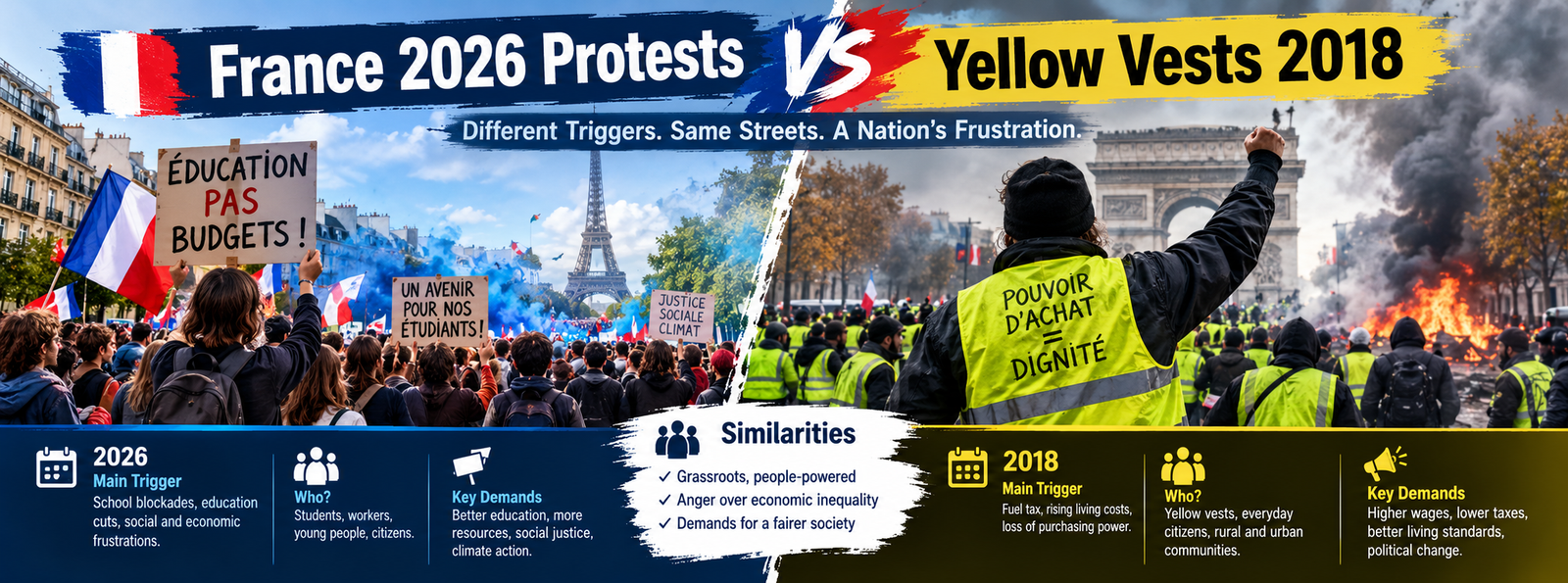
When tens of thousands of people in high-visibility vests filled French streets on October 17, the comparison was instant. Is this the Yellow Vests all over again? The date was chosen on purpose, a nod to November 17, 2018, when the original movement began. But the people who were there in 2018 are not all […]
When tens of thousands of people in high-visibility vests filled French streets on October 17, the comparison was instant. Is this the Yellow Vests all over again? The date was chosen on purpose, a nod to November 17, 2018, when the original movement began. But the people who were there in 2018 are not all convinced it’s the same thing.
Short answer: they share an anger, but not much else. Here is how the two movements line up. For the full story of the current crisis, see our main guide, France Protests 2026, and for the dates, our day-by-day timeline.
How the Yellow Vests Started in 2018
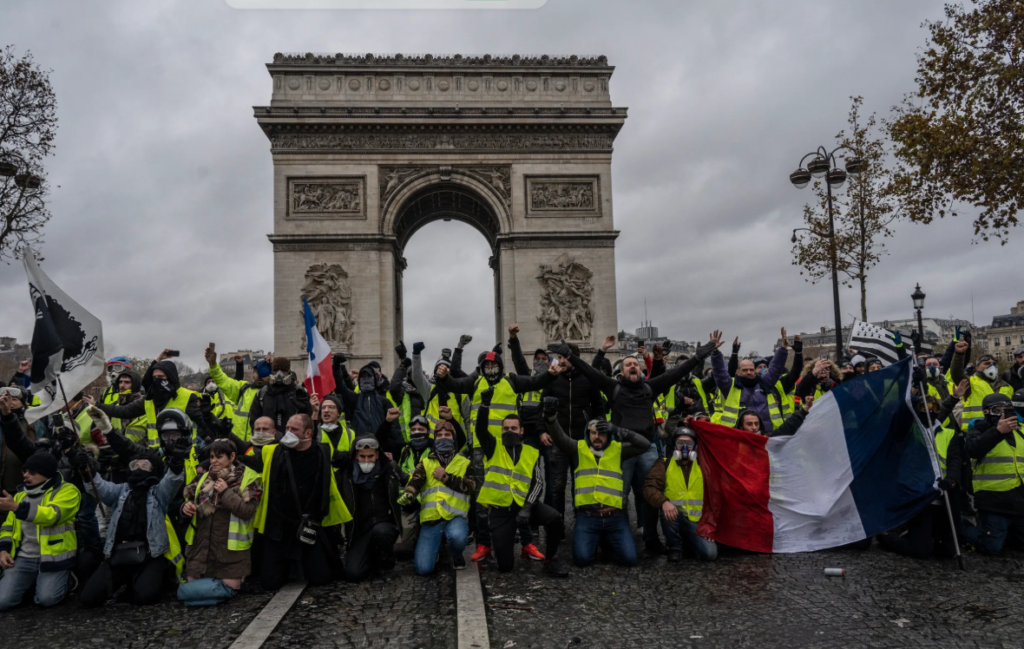
The Yellow Vests (gilets jaunes) began on November 17, 2018, as a social media response to rising fuel prices and grew into a wider protest against social inequality. The spark was a planned fuel tax increase. The deeper complaint was that ordinary people, especially in small towns and rural areas, felt squeezed while Macron looked like a president of the rich.
The movement had no official leaders and dozens of separate demands. It took over roundabouts and motorways, and it came back every Saturday for months. It faded during the COVID-19 pandemic and the protests formally ended in 2020.
How the 2026 Protests Started
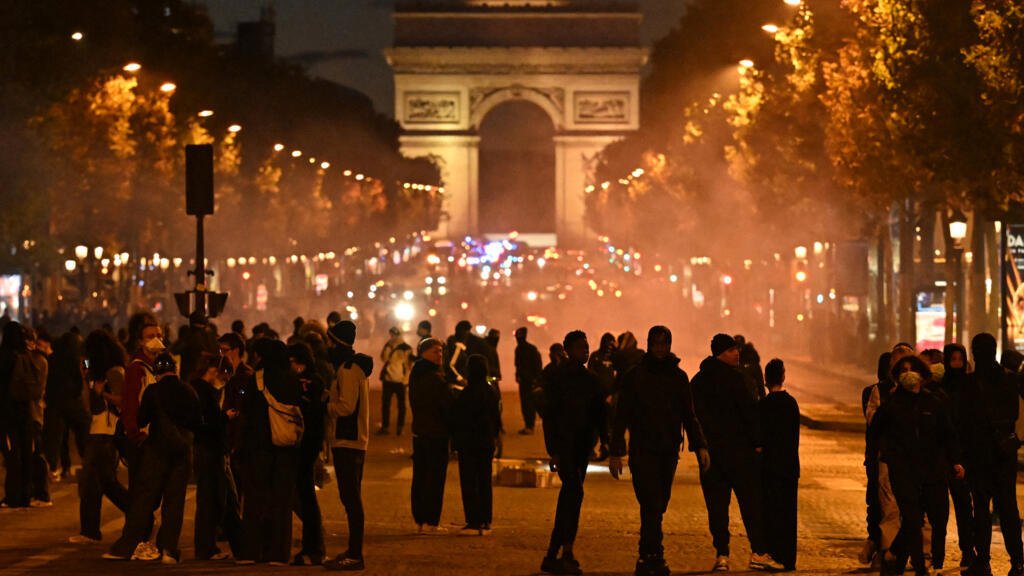
This time the first spark came from schools. In mid-September, students at a high school in Créteil protested over dilapidated buildings, overcrowded classrooms and teacher shortages. The movement spread to hundreds of schools. Then a second wave, about fuel and the cost of living, joined in. Diesel had climbed to around €2.37 a litre, close to its record, because of the Iran war and the blockade of the Strait of Hormuz.
The October 17 call itself began with a TikTok video posted in early September, according to French press cited by ARA. Notably, no Yellow Vest leaders were behind it, although many joined later.
Side by Side
| Yellow Vests 2018 | France protests 2026 | |
|---|---|---|
| Started | November 17, 2018 | Mid-September 2026 (schools); October 17 for the cost-of-living wave |
| Trigger | Planned fuel tax increase | Teacher shortages and school conditions, then fuel prices and the cost of living |
| Who protests | Mostly working and middle-class adults, many from small towns | Mostly high school and university students, plus unions, farmers, climate groups and former Yellow Vests |
| Organisation | No official leaders, social media driven | Student unions, the CGT union and political parties, plus a viral online call |
| Tactics | Roundabout and motorway blockades, weekly Saturday marches | School blockades, national days of action, one big Saturday march |
| Official peak turnout | 287,710 (Interior Ministry) | About 550,000 on October 17 (Interior Ministry) |
| Government response | Fuel tax scrapped, wage and tax concessions | 3,000 substitute teachers, stun grenades suspended for student protests, a package promised by end of October |
Same Anger, Different People
The biggest difference is who is on the streets. In 2018 it was largely adults who drove to work and felt the fuel price directly. In 2026 the core is teenagers. By October 6 the Justice Ministry said 5,060 people had been arrested, and 87% of them were minors. That changes how the public sees police tactics, and it is part of why the grenade injury to a 15-year-old in Lens hit so hard.
The Yellow Vest veterans know this. Jérôme Rodrigues, a well-known figure who lost an eye to a rubber-ball grenade in 2019, said no Yellow Vest was behind the October 17 call and that people now slap the label on any fuel-price anger. He still sees a link, though: students have faced the same kind of police “repression” the Yellow Vests described. Another figure said the framework is now “more institutional” than the spontaneous demonstrations they used to organise.
Turnout: Be Careful With the Numbers
On paper, the Interior Ministry’s October 17 figure of 550,000 is bigger than its 2018 peak of 287,710. But one wire report described the 2026 crowds as smaller than at the peak of the Yellow Vest movement, which does not match those official figures. The two movements were also counted differently. The Yellow Vests were spread across roundabouts every weekend, while 2026 is built around single national days. Union counts are usually higher than the ministry’s too: the CGT said 800,000 on October 17.
Our advice: don’t treat any comparison of crowd sizes as settled. Compare the trend within each movement, not the totals between them.
Violence and Policing
Both movements had moments that shocked France. In 2018, graffiti on the Arc de Triomphe on December 1 became the symbol. In 2026, a town hall burned in Limoges, a tourist office caught fire in Lyon, and cars were set alight and shops looted in Paris. Paris police made a record 855 arrests on October 17 alone.
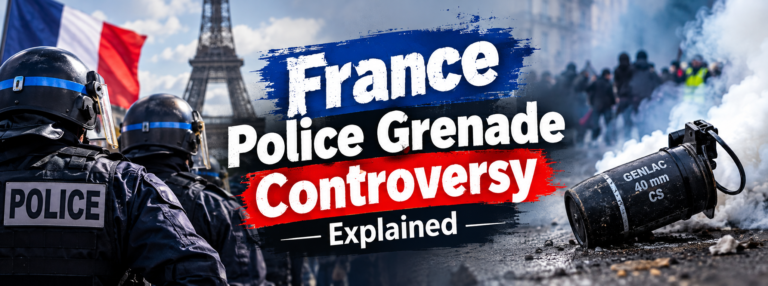
Police tactics are a shared flashpoint. The 2018 movement left a long list of injuries and a lasting row over the use of force. Today, the government has suspended stun grenades for student protests but the interior minister warned they could still be used on October 17 if clashes broke out.
The 2018 movement also gave us a number worth knowing: more than 4,500 arrests across France within about three weeks, as reported at the time. In 2026, 6,629 people were detained between September 28 and October 8 alone, by the prime minister’s count.
How Macron Responded Then and Now

In 2018, the government gave way, but only after weeks of unrest. Macron cancelled the fuel tax, then in a televised address on December 10 promised a €100 monthly minimum wage rise, tax-free overtime and the cancellation of a tax increase on low pensions. A minister put the cost at €8 billion to €10 billion. He refused to bring back the wealth tax.
In 2026, there is less room to move. The government is trying to pass a 2027 budget with heavy spending cuts, and France’s borrowing costs are at their highest in more than two decades. Students are asking for a 10 billion euro plan for schools. So far the answers have been smaller: 3,000 substitute teachers, a promise of proposals by the end of October, and the release of 10 million barrels from the strategic diesel reserve to lower fuel prices.
Will It Last as Long as the Yellow Vests?
Nobody knows. The 2018 movement lasted well over a year. The 2026 one is only about a month old, but it already has something the Yellow Vests never had: students, unions and the Yellow Vest name all on the same side. A French analyst quoted by ARA noted that the student protest is “becoming entrenched without being resolved.” That is the one thing that could keep it going.
What we’ll be watching is the end-of-October government package, the 2027 budget fight, and whether more Saturday protests follow October 17, which is how the Yellow Vests kept going in 2018.
We update this page as new figures arrive. For the full background, read our France Protests 2026 guide.



One thought on “France 2026 Protests vs Yellow Vests 2018: What’s the Same, What’s Different”