
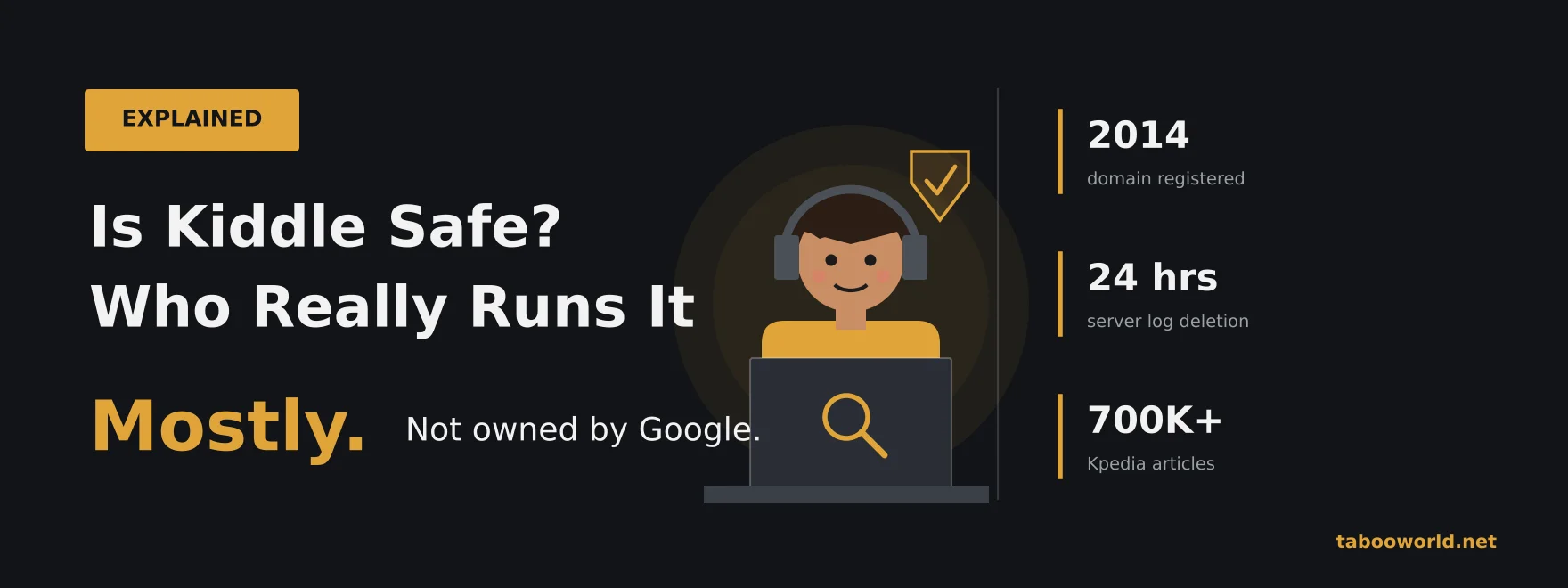
Listen to this article 1× Quick answer: Kiddle com is how most people search for Kiddle, a kids’ search engine launched in 2014. The official address is kiddle.co, not .com. It runs on Google’s Programmable Search Engine with SafeSearch plus its own word filters, but Google does not own it. It is mostly safe for […]
Quick answer: Kiddle com is how most people search for Kiddle, a kids’ search engine launched in 2014. The official address is kiddle.co, not .com. It runs on Google’s Programmable Search Engine with SafeSearch plus its own word filters, but Google does not own it. It is mostly safe for ages 8 to 12, yet no filter is perfect, and a 2016 word-blocking row still shapes its reputation.
Why we checked this: Kiddle com is one of the most searched names in kids’ online safety. The site pulls hundreds of thousands of visits a month, and many parents assume it is a Google product. We compared Kiddle’s own feature notes with 2016 reporting from BBC News, The Next Web and ITWeb, plus current reviews from Bark and Educators Technology.
Key facts at a glance
- Domain registered in 2014; went viral in early 2016.
- Powered by Google Programmable Search Engine, not affiliated with Google.
- Top three results are kids’ pages picked by Kiddle editors.
- Says it collects no personally identifiable data and deletes server logs every 24 hours.
- In March 2016 it blocked “gay”, “lesbian”, “puberty” and other terms, then reversed within about a week.
- No government ban on Kiddle exists in the USA, UK or elsewhere that we could find.
Is Kiddle com the real Kiddle website?
Many parents type Kiddle com into Google or the address bar. The official site, though, sits on the kiddle.co domain. Its team says the “.co” ending stands for “children only”, which is a deliberate choice rather than a typo.
Before letting a child use it, check that the address bar shows kiddle.co. Lookalike domains and copycat pages often target popular kids’ brands, so bookmarking the correct address is the safest habit.
What is Kiddle and who runs it?
Built for children, Kiddle is a visual search engine with its own online encyclopedia. Its domain dates back to 2014, and the site became a social media talking point in 2016.
The search box uses Google’s Programmable Search Engine with SafeSearch switched on. Kiddle then adds its own keyword filters and a blocklist of sites. The page colours look a lot like Google’s, which is why so many people call it “Google for kids”.
That label is wrong, and the site says so itself: its own pages state that it is not affiliated with Google. When ITWeb investigated in March 2016, the publication could not identify who owned the site. Google declined to comment at the time.
The company also runs Kpedia, a kids’ encyclopedia. It holds more than 700,000 articles based on Wikipedia content and rewritten for young readers. A Spanish version has been live since July 2023.
How does Kiddle sort its search results?
Results are ranked by how suitable they are for children, not only by relevance. The order follows three tiers, according to the site’s own description.
| Result position | What appears there | Who checks it |
|---|---|---|
| 1 to 3 | Pages written specifically for kids | Kiddle editors |
| 4 to 7 | Trusted sites in simple language, not written for kids | Kiddle editors |
| 8 and below | Well-known adult sites with expert content | Google SafeSearch filter |
Results show large thumbnails and a big Arial font. Kiddle says this helps younger children who read slowly scan the page faster. Parents and teachers can also submit words or websites they think should be blocked.
Why was Kiddle so controversial in 2016?
In March 2016 the site hit headlines for the words it refused to search. BBC News reported that terms such as “menstruation”, “lesbian” and “gay” returned no results. Searches triggered a robot warning that the query contained “bad words”.
LGBT queries got a separate message. It told children that Kiddle had “nothing against the LGBT community” but could not guarantee safe results, and suggested they ask a parent. UK charity Stonewall said young people regularly search online for LGBT information and urged Kiddle to rethink the block.
Critics found more gaps. The Next Web argued that blocking suicide-related searches left children in crisis with no route to help. Mombian, a parenting blog, showed that “breast cancer” and even “chicken breast” hit the bad-words wall. Reports also differed on whether “transgender” was blocked at launch.
At first, the company defended its filters. The company told the BBC it had received complaints from parents and teachers during early tests. It also argued that content fine for a 12-year-old may not suit a five-year-old.
Did Kiddle change its filters after the backlash?
Yes, and quickly. By early March 2016, Kiddle had unblocked “LGBT”, “lesbian”, “gay”, “bisexual” and “queer”, according to Mombian’s follow-up. Both warning messages were removed. Yahoo News reported that “puberty” and “gay” returned child-suitable results after the change, though some other terms stayed blocked.
The episode still shows up in search today. Wikipedia keeps a controversy section on it, and the story became an early meme about over-filtering online.
Is Kiddle safe for kids to use?
For younger children, Kiddle is safer than an open Google search. The editor-picked top results and SafeSearch layer remove most explicit material. Many schools in the US and UK list it on their online safety pages.
It is not a full safety tool, though. Bark, a parental monitoring company, notes that Kiddle gives parents no view of what their kids search. Bark also says it can over-filter for older children and still miss some content. The Next Web showed in 2016 that a misspelled word could slip past the filter.
Bark suggests the tool fits children aged roughly 8 to 12. Teens usually outgrow it and switch to a normal browser, so filters at the router or device level matter more for them.
Does Kiddle collect children’s data?
No sign-up is needed, and the site says it collects no personally identifiable information. Its policy states that server logs are deleted every 24 hours. It may still use aggregate figures such as visit counts to measure site performance.
Two caveats apply. Results run through Google’s custom search, which uses Google cookies to serve them. Any site a child opens from the results also has its own privacy policy. Educators Technology advises schools to check Kiddle’s policy against their own rules before rolling it out.
How does Kiddle compare with KidRex and KidzSearch?
Kiddle has rivals, and several are also built on Google technology. A 2016 comparison by Mombian tested the main rivals side by side.
| Feature (as reported in 2016) | Kiddle | KidzSearch | KidRex |
|---|---|---|---|
| Runs ads | Yes (Google AdSense) | Yes (Google AdSense) | No |
| “LGBT” search at the time | Blocked, later unblocked | Blocked “LGBT”, allowed “LGBTQ” | Allowed |
| “Breast cancer” search | Blocked | Not tested | Allowed |
These results are from 2016 testing. Filters on all three sites may have changed since, so test a few searches yourself before choosing one.
Is Kiddle banned or blocked anywhere?
We found no government or regulator that bans Kiddle. Its 2016 story was about Kiddle blocking words, not authorities blocking Kiddle. Schools and districts more often recommend it than restrict it.
Real bans on websites and apps look very different. They usually come from a law or a regulator order, like the country-level cases tracked in the TabooWorld Banned Around the World database.
Key takeaways
- Kiddle uses Google search technology but is an independent site with no Google ownership.
- Editor-picked top results make it a solid first search tool for kids aged about 8 to 12.
- The 2016 word-blocking backlash pushed Kiddle to unblock LGBT and health terms within days.
- It gives parents no activity reports, so pair it with device-level controls.
Think of Kiddle com as training wheels for curious young searchers, not a full lock on the internet. Parents who also want alerts about risky toys, food or gadgets can follow our pick of apps that track product recalls and safety alerts as a second layer of family protection.
Frequently asked questions
Is Kiddle com the same as kiddle.co?
People often search for Kiddle com, but the official Kiddle website uses the kiddle.co address. Kiddle says the .co ending means “children only”. Bookmark kiddle.co so your child always lands on the real site.
Is Kiddle owned by Google?
No. Kiddle uses Google’s Programmable Search Engine and SafeSearch to power its results, but it states on its own site that it is not affiliated with Google. The owner was not publicly identified when the site launched in 2016.
What age is Kiddle for?
Kiddle has no official age limit. Bark suggests it fits children aged roughly 8 to 12, who can search alone but cannot yet spot risky content. Older kids may find its filters too strict for school research.
Why did Kiddle block the word gay?
Kiddle said it could not guarantee safe results for LGBT searches and had complaints from parents and teachers during testing. After criticism from Stonewall and others in March 2016, it unblocked “gay”, “lesbian”, “bisexual”, “queer” and “LGBT”.
Does Kiddle track children?
Kiddle says it collects no personally identifiable information and deletes its server logs every 24 hours. Results run through Google’s custom search, which uses Google cookies, and sites opened from results have their own privacy policies.
What is Kpedia on Kiddle?
Kpedia is Kiddle’s children’s encyclopedia. It lists more than 700,000 articles based on Wikipedia content and rewritten in simpler language for kids. Kpedia pages often appear inside Kiddle search results for homework topics.
Sources
- Wikipedia, Kiddle (search engine)
- ITWeb, Tricky debut for Kiddle search engine (March 2016)
- The Next Web, Kiddle is promoting ignorance, not safety (March 2016)
- Tech Monitor, Kiddle blocks words such as lesbian and gay (2016)
- Yahoo News, Kiddle removes block on gay and puberty
- Mombian, Kiddle unblocks LGBTQ words (March 7, 2016)
- Mombian, New kids’ search engine fumbles LGBTQ terms (March 1, 2016)
- Bark, Kiddle search engine for kids (2022)
- Educators Technology, Kiddle review
- Sophos, Child-friendly search engines, how safe is Kiddle?