

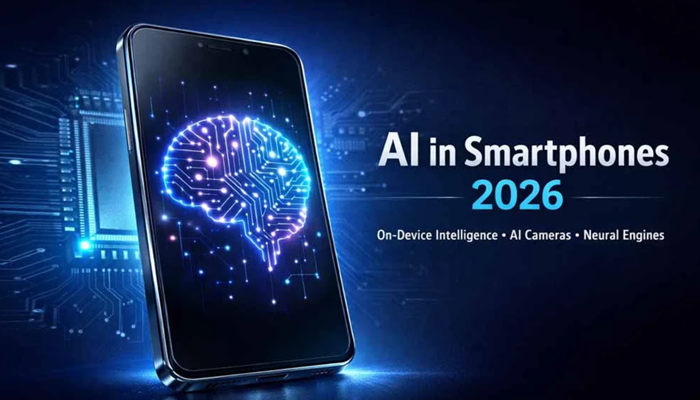
Artificial intelligence is rapidly becoming one of the biggest forces shaping the smartphone industry. From smarter cameras and personalized assistants to real-time translation and improved battery management, AI-powered features are changing how people interact with their mobile devices. As smartphone manufacturers continue to invest heavily in artificial intelligence, users are increasingly seeing AI tools built […]
Artificial intelligence is rapidly becoming one of the biggest forces shaping the smartphone industry. From smarter cameras and personalized assistants to real-time translation and improved battery management, AI-powered features are changing how people interact with their mobile devices.
As smartphone manufacturers continue to invest heavily in artificial intelligence, users are increasingly seeing AI tools built directly into everyday apps and device functions. The shift is transforming smartphones from traditional communication devices into more personalized digital assistants.
AI Is Becoming a Core Smartphone Feature
Artificial intelligence was once mainly associated with specialized software and online services. Today, it is becoming a standard part of modern smartphones.
Newer devices can use AI to understand user behavior, improve photographs, organize information and automate routine tasks. Instead of requiring users to manually adjust settings, smartphones can increasingly make decisions based on what is happening on the screen or around the device.
For example, AI-powered camera systems can identify subjects, improve lighting and reduce unwanted noise in photographs. Some devices can also recognize different scenes and automatically adjust camera settings to produce better results.
This technology is particularly useful for people who want high-quality photographs without spending time learning complicated camera controls.
Smartphone Assistants Are Getting Smarter
Another major area of development is the AI assistant.
Traditional voice assistants were primarily designed to respond to simple commands, such as setting alarms, checking the weather or making phone calls. Newer AI systems are designed to understand more natural conversations and handle more complicated requests.
Users can ask AI assistants to summarize information, rewrite messages, explain difficult topics or organize content. In some cases, AI can also work across different applications, helping users complete several steps without repeatedly switching between apps.
This development could make smartphones more useful for work, education and everyday communication.
AI Is Transforming Mobile Photography
Photography remains one of the most competitive areas of the smartphone market, and artificial intelligence is playing an increasingly important role.
Modern phones can process images immediately after a photograph is taken. AI algorithms can analyze colors, lighting, faces and backgrounds before producing the final image.
Computational photography can also improve pictures taken in difficult conditions, including low-light environments. AI-based image processing can reduce noise, improve sharpness and balance exposure.
Some smartphones also provide AI-powered editing tools that allow users to remove unwanted objects, improve portraits or change elements of an image.
These features are making advanced photo editing accessible to people who may not have professional editing skills.
AI Could Improve Battery Life
Battery technology has not advanced at the same speed as many other smartphone features, but artificial intelligence could help devices use available power more efficiently.
AI systems can study how a person uses their phone and identify which applications are most important. The device can then adjust background activity and processing resources to reduce unnecessary battery consumption.
For example, applications that are rarely used may receive fewer background resources, while frequently used services can receive priority.
The goal is not simply to create larger batteries but to make smartphones smarter about how they consume energy.
Real-Time Translation Is Expanding
Language translation is another area where mobile AI is making noticeable progress.
AI-powered translation tools can convert spoken or written language into another language almost immediately. Some systems are also designed to work directly on smartphones, reducing the need for a separate translation application.
Real-time translation could be especially useful for travelers, international students, businesses and people communicating across different languages.
As processing technology improves, mobile devices may eventually be able to handle increasingly complex conversations with less dependence on cloud-based services.
On-Device AI Could Improve Privacy
One of the important developments in mobile artificial intelligence is the move toward on-device processing.
In traditional cloud-based systems, information may need to be sent to remote servers for processing. With on-device AI, some tasks can be completed directly on the smartphone.
This approach can reduce the amount of personal information that needs to leave the device. It can also make certain AI features faster because the phone does not always need to communicate with a remote server.
However, privacy depends on how individual manufacturers design and manage their AI systems. Users should still review application permissions and privacy settings before enabling new AI-powered services.
AI Features Are Also Raising New Concerns
Despite the advantages, the rapid growth of smartphone AI has raised questions about privacy, accuracy and security.
AI systems can sometimes produce incorrect information or misunderstand a user’s request. Image-editing tools can also make it easier to create highly realistic but misleading photographs.
There are also concerns about how personal information is collected and processed by AI services.
Technology companies are therefore facing increasing pressure to provide clearer information about how their AI tools work and what data they use.
Smartphone Competition Is Becoming an AI Competition
Artificial intelligence is also changing the way smartphone companies compete.
In previous years, manufacturers often focused on screen quality, camera hardware, processor speed and battery capacity. Those specifications remain important, but AI capabilities are increasingly becoming a major selling point.
Companies are now developing their own AI platforms and integrating them into smartphones, operating systems and applications.
This means future smartphone competition may depend not only on hardware but also on how effectively a device can understand its user and perform tasks automatically.
What Could Come Next?
The next stage of smartphone development could involve even deeper integration between AI and everyday mobile activities.
Instead of simply responding to individual commands, AI systems may increasingly anticipate what users need. A smartphone could potentially organize schedules, summarize incoming information, prepare responses and suggest actions based on context.
Such technology could save time, but it also creates a need for strong privacy controls and transparent AI policies.
The balance between convenience and user control will likely become one of the biggest issues in the future of consumer technology.
The Future of Mobile Technology
Artificial intelligence is no longer a feature limited to experimental technology products. It is becoming part of mainstream smartphones and changing how people use their devices.
From photography and translation to productivity, battery management and digital assistants, AI is influencing almost every major area of mobile technology.
As smartphone manufacturers continue developing more powerful processors and AI systems, users can expect these capabilities to become more deeply integrated into everyday applications.
The biggest change may be that smartphones will increasingly move away from being devices that simply wait for commands. Instead, they could become intelligent assistants capable of understanding context, predicting needs and helping users complete tasks with fewer steps.
For consumers, this evolution could bring faster and more convenient technology. At the same time, privacy, security and responsible AI development will remain important as smartphones become increasingly aware of their users and surroundings.
FAQ
How does AI improve the camera performance on modern smartphones?
AI improves camera performance by automatically identifying subjects, adjusting lighting, reducing noise, and recognizing scenes to set optimal camera parameters, resulting in higher‑quality photos without manual adjustments.
Can AI assistants on smartphones handle more complex requests than traditional voice assistants?
Yes, newer AI assistants can understand natural conversations, summarize information, rewrite messages, explain topics, and coordinate actions across multiple apps, making them useful for work, education, and everyday communication.
In what ways does AI help extend smartphone battery life?
AI helps extend battery life by learning a user’s app usage patterns and allocating background resources accordingly, reducing power for rarely used apps while prioritizing frequently used services.
How does on‑device AI affect privacy on smartphones?
On‑device AI processes certain tasks directly on the phone, which reduces the amount of personal data sent to remote servers and can make features faster, though overall privacy still depends on the manufacturer’s implementation and user settings.

4 Comments